Couple Paying Bills

Understand My Bill

Everything you need to know about your energy bill.

Common Causes of High Bills During Seasonal Peaks

Why is My Bill High? cta btn

Understanding Rates and Where Your Payment Goes

How Rates are Determined cta btn

Bill Samples

Preview details of your sample bill.
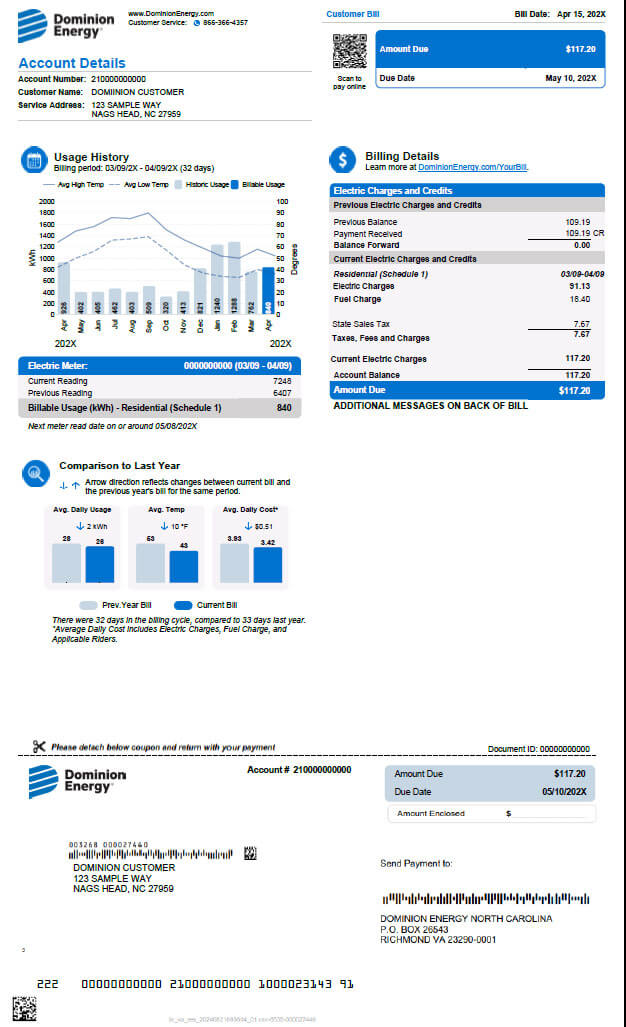
North Carolina Bill Sample Front Front of Bill
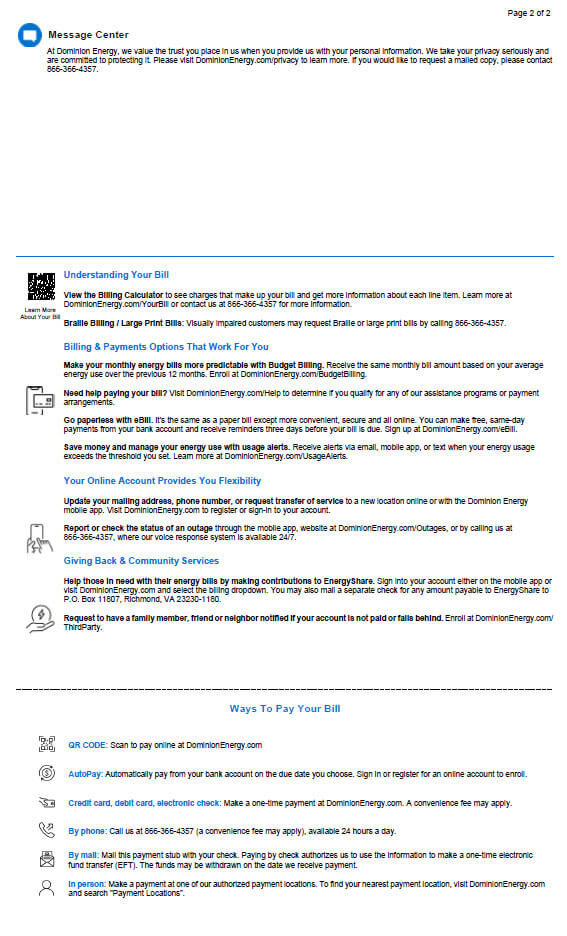
North Carolina Bill Sample Back Back of Bill

A Detailed Look at Your Bill

A section-by-section explanation of your bill.
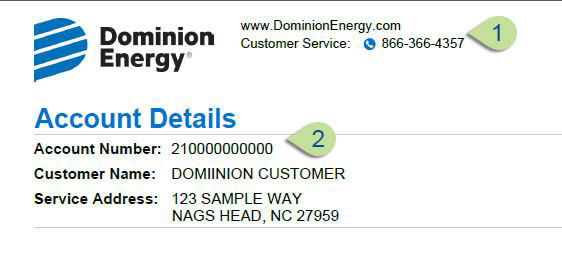
North Carolina Bill Sample Items 1-2
  1. Contact Information:
    Contact us to report an outage, make a payment, manage your account and more.
  2. Account Number:
    This is your unique identifier for service at this address. Refer to this number when contacting us about your account.
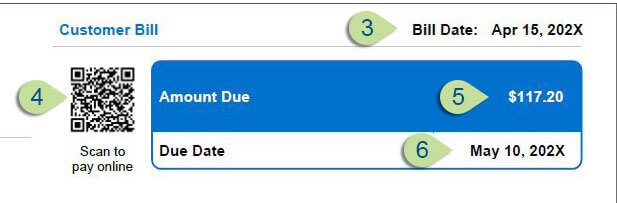
North Carolina Bill Sample Items 3-6
  1. Bill Date:
    This is the date the bill was generated.
  2. Scan to Pay QR Code:
    Scan for easy access to make an online payment. A convenience fee may apply when paying online.
  3. Amount Due:
    The amount due is what you owe for services during this billing period, plus any outstanding charges from prior billing periods.
  4. Due Date:
    The due date is the date by which payment for the current charges must be received to avoid a late charge.
North Carolina Bill Sample Items 7-10
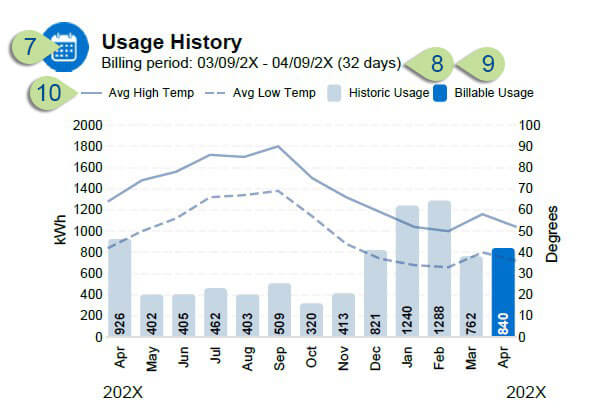
  1. Usage History:
    Review up to your past 13 months of Billable Usage history to see trends in your energy usage.
  2. Service Period Dates:
    This is the date range for this billing period.
  3. Current Billing Days:
    The number of days in the billing period, which may fluctuate due to weekends and holidays.
  4. Temperature:
    The average high temperature and average low temperature for the current and previous 12 months. Weather data is provided as a reference point only.
North Carolina Bill Sample Items 11-15
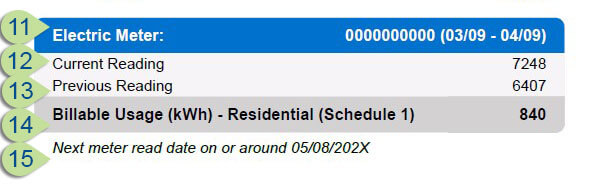
  1. Electric Meter:
    Unique identifier associated with the electric meter at the service address.
  2. Current Reading:
    The meter reading captured on the end date of the billing period. An estimated reading is designated by the word "Estimated" after the reading number. An estimated reading is determined based on prior usage. In the event the next actual reading is lower than the estimated reading, the adjustment will occur on the next bill. Customers on a "Time of Use" rate will see additional billing details (e.g. On-Peak Usage, Off-Peak Usage, Super Off-Peak Usage, Demand) in place of the Current Reading and Previous Reading.
  3. Previous Reading:
    The meter reading captured on the beginning date of the billing period. Customers on a "Time of Use" rate will see additional billing details (e.g. On-Peak Usage, Off-Peak Usage, Super Off-Peak Usage, Demand) in place of the Current Reading and Previous Reading.
  4. Billable Usage (kWh):
    The difference between your Current Reading and Previous Reading. The billable usage for customers enrolled in a "Time of Use" rate is the sum of the measured 30-minute intervals for the billing period.
  5. Next Meter Reading Date:
    The date the next meter reading is scheduled to occur.
North Carolina Bill Sample Items 16-18
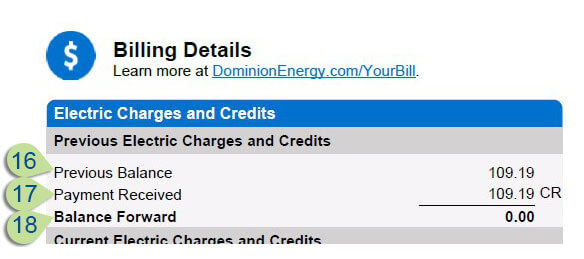
  1. Previous Balance:
    The total charges from your previous billing period (last bill).
  2. Payment Received:
    Sum of all payments and credits received between the previous bill date and the current bill date.
  3. Balance Forward:
    The difference between the Previous Balance and Payments Received.
North Carolina Bill Sample Items 19-26
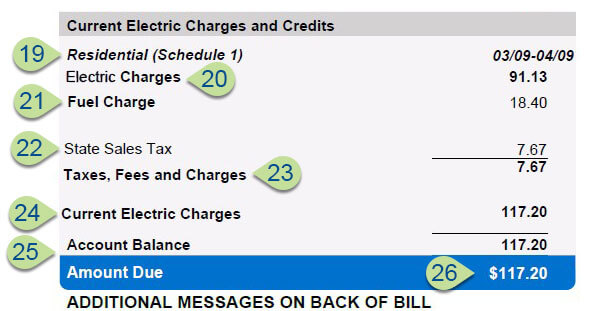
  1. Schedule:
    The rate schedule used to calculate your bill. Learn more about rate schedules.
  2. Electric Charges:
    Calculated by multiplying your Billable Usage by the rate as determined in your schedule. Applicable riders are included in this charge.
  3. Fuel Charge:
    The cost for fuel used to produce electricity, including fuel shipment.
  4. State Sales Tax:
    State sales tax of 7% applied to your Current Electric Charges. This tax is remitted to the North Carolina Department of Revenue.
  5. Taxes, Fees and Charges:
    Subtotal of the service fees and taxes described above and any additional charges (e.g. late payment charge).
  6. Current Electric Charges:
    Your current Billable Usage charged according to your Schedule, plus the service fees and taxes described above and any additional charges.
  7. Account Balance:
    The sum of your Total Current Charges and any Balance Forward.
  8. Amount Due:
    The amount owed for the current billing period.
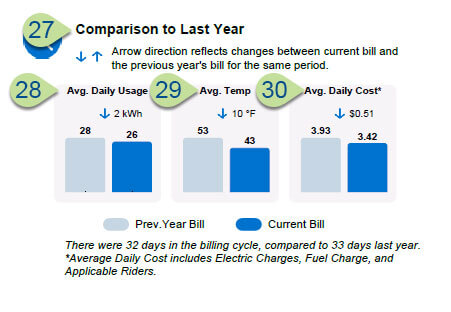
North Carolina Bill Sample Items 27-30
  1. Comparison to Last Year:
    Compares the average daily usage and average daily cost from your current billing period to the previous year’s bill for the same period. The average daily temperature is also provided for informational purposes.
  2. Average Daily Usage:
    The total billable usage from the billing period divided by the number of days in the billing period. The difference between this period and the same period last year lets you see how your usage changed.
  3. Average Temperature:
    The average temperature during the previous year bill period and current bill period. Weather data is provided for informational purposes only. Weather may be a factor in higher usage due to increased air conditioning and heating use.
  4. Average Daily Cost:
    The average daily cost is determined by adding the Electric Charges, Fuel Charges and any Applicable Riders, and dividing by the total by the number of days in the billing period. The charges in the Taxes, Fees and Charges section are excluded from this calculation, as well as any additional charges such as a security deposit. The difference between this period and the same period last year lets you see how costs for your usage fluctuates.
North Carolina Bill Sample Item 31
  1. Message Center:
    Information about your electric service and programs will be displayed in the Message Center.

Disclaimer: These sample bills are provided only to help explain your Dominion Energy North Carolina bill. The current charges, total other charges, credits, usage, and other information on the sample bills are provided as an example, and in no way bear any relationship to the actual charges, credit, usage or other information on your actual bill.

Additional Resources

Avoid Surprises on Your Bill

Get text or email alerts when your energy use changes, so you can stay in control.
Enroll in Energy Alerts cta btn

Need Help Paying Your Bill?

Explore resources and assistance programs to help you stay on track.
See your options cta btn

Bill Calculator Worksheet

You can open this worksheet in Microsoft Excel or using a number of free programs, including Microsoft Office Online, Google Sheets and LibreOffice.

See How Your Bill is Calculated cta btn