Skip to Content





An easement (also called a right of way) is a legal right that allows one party to use another person’s property for a defined purpose. Although the property owner retains full ownership of the land, the easement grants the holder the authority to use the property in the specific manner described in the agreement.
As a public utility, Dominion Energy regularly acquires easements to support its operations. These easements are most commonly needed for the installation, operation, and maintenance of transmission and distribution lines, as well as substations. Dominion Energy also acquires easements for related purposes, such as accessing company facilities and performing necessary maintenance to ensure those facilities remain safe and functional.
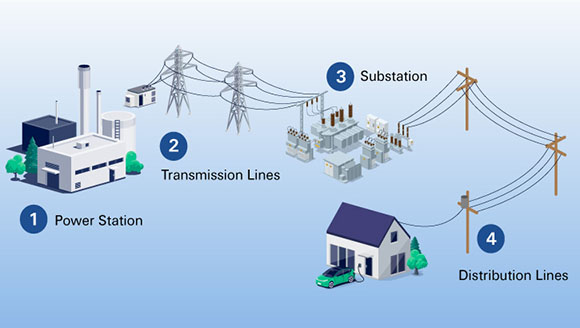
1) Power station, 2) Transmission lines, 3) Substation, 4) Distribution lines
Landowners generally can continue to use their property in the right of way if the use is compatible with the purpose of the easement. Incompatible uses in the right of way are referred to as encroachments.
Most easements do not expire. When property is sold and conveyed to another, the easements remain in effect and are binding. Because an easement may impact the buyer's plans to use the property, buyers should inspect property to determine whether an electric transmission line easement is in place. In some cases, an easement allows compatible uses.
Some of Dominion Energy’s easements date back to the late 1800s and may not be found as part of a typical title search and may not appear on your title insurance policy. However, the easement documents are still valid and enforceable. If the easement document is not reflected in your owner’s title insurance policy, it does not mean that the easement does not exist. For detailed information, ask your attorney or title company to run an expanded title search up to 100 years.